
Non-ferrous Metals
Metal Capillary
Advanced Ceramics
Boron Nitride Ceramic
Pyrolytic Boron Nitride
Silicon Nitride Ceramic
Aluminum Nitride Ceramic
Zirconia Ceramic
Alumina Ceramic
Silicon Carbide Ceramic
Deposition Materials
Semimetal Elements
Functional Materials
Neodymium Magnets
Neodymium Disc Magnets
Neodymium Cylinder Magnets
Neodymium Block Magnets
Neodymium Ring Magnets
Neodymium Countersunk Magnets
Magnetic Assemblies
Arc Magnets
Custom Shaped Magnets
Rare Earth Elements
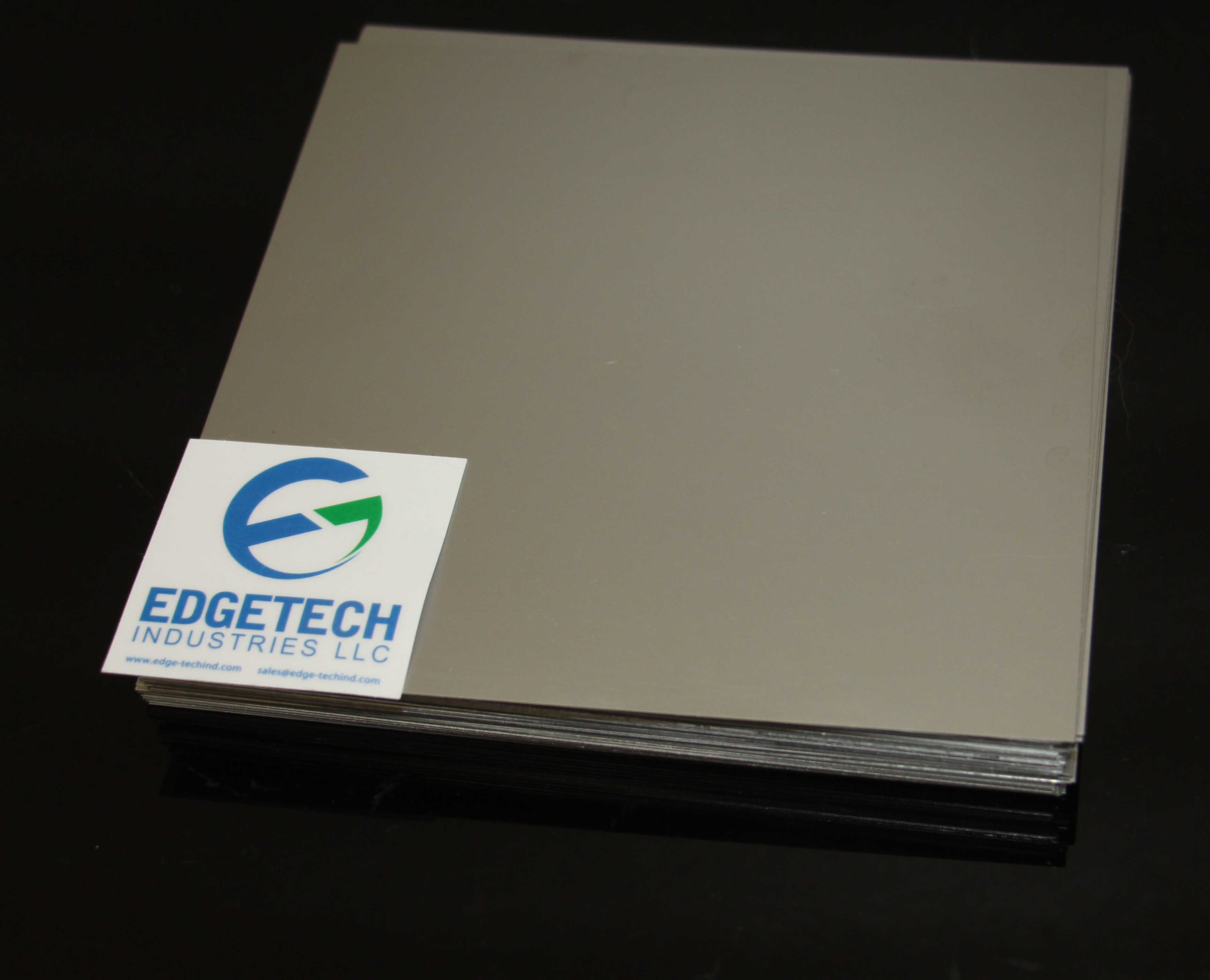

Typical Medical Device Applications of Nitinol Sheet: Why Engineers Care About S
In medical device design, the material question is rarely just “Can it work?” A more practical question is whether it can survive repeated deformation, fit into a limited space, and still deliver predictable long-term performance. That is exactly why more design teams are evaluating Nitinol Sheet early in development.
From an engineering perspective, the value of Nitinol Sheet comes from two core properties. The first is super elastic behavior, meaning the material can tolerate relatively large strain and still recover its original geometry. The second is shape memory, where the material can be heat-set to return to a pre-defined form under the right conditions. Conventional stainless steel or titanium may perform well in many situations, but they do not offer this same combination.
In real applications, Nitinol Sheet is often considered for minimally invasive device components, deployable structures, implantable elastic parts, and precision-cut thin sections. In products that need to be delivered through a small access path and then recover their functional shape inside the body, the advantages of a shape memory alloy become much more obvious. Engineers working on these products are not only looking at recovery force. They are also paying attention to fatigue life, edge quality, surface condition, and downstream forming stability.
Another practical advantage is the sheet format itself. Compared with wire or tubing, Nitinol Sheet can be easier to use for two-dimensional patterning, laser cutting, micro-stamping, and custom thin-wall geometries. For device designers who need complex cut patterns, flexible zones, or optimized stiffness distribution, sheet stock often provides more design freedom.
Of course, medical applications demand tighter process control. Transformation temperature, composition consistency, thickness tolerance, and surface finish all influence final device performance. That is why a supplier’s ability to provide consistent Nitinol Sheet is often more important than offering the lowest initial price.
Seen from the product development side, Nitinol Sheet is not just a premium material label. It is a practical engineering option for solving deployment, recovery, elastic support, and fatigue challenges in advanced medical devices.