
Non-ferrous Metals
Metal Capillary
Advanced Ceramics
Boron Nitride Ceramic
Pyrolytic Boron Nitride
Silicon Nitride Ceramic
Aluminum Nitride Ceramic
Zirconia Ceramic
Alumina Ceramic
Silicon Carbide Ceramic
Deposition Materials
Semimetal Elements
Functional Materials
Neodymium Magnets
Neodymium Disc Magnets
Neodymium Cylinder Magnets
Neodymium Block Magnets
Neodymium Ring Magnets
Neodymium Countersunk Magnets
Magnetic Assemblies
Arc Magnets
Custom Shaped Magnets
Rare Earth Elements
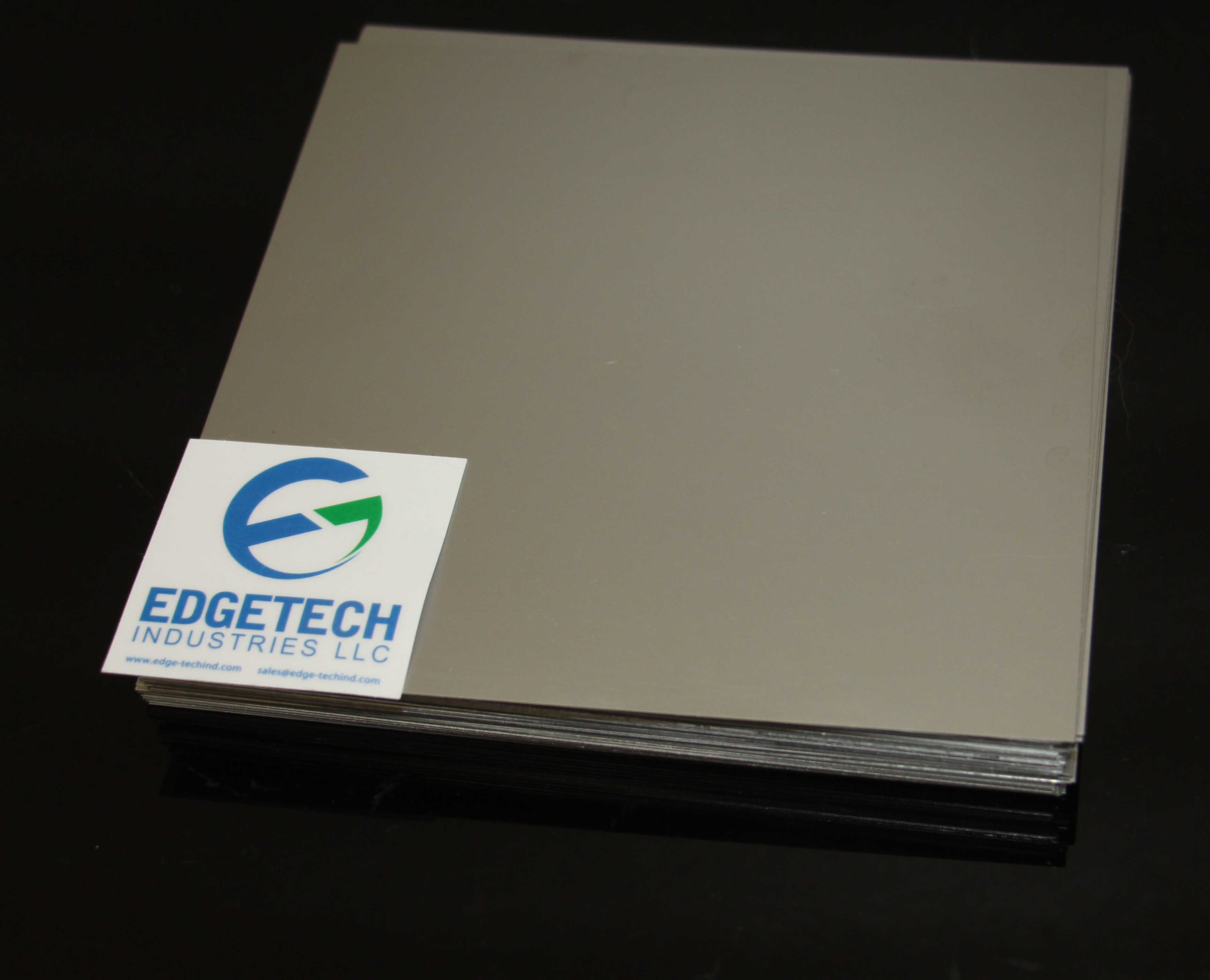

Nitinol Sheet in Micro-Mechanical Devices (MEMS): Precision at the Smallest Scal
Micro-mechanical systems (MEMS) require materials that maintain exceptional stability at extremely small dimensions. Nitinol sheet, due to its phase-transformative behavior, allows designers to build structures that can bend, move, and actuate despite being only microns thick.
Why Nitinol Sheet Works in MEMS
MEMS systems demand:
-low mass
-precise deformation
-long fatigue life
-predictable thermal response
-resistance to micro-cracks
Nitinol sheet satisfies all these conditions.
Micro Actuators
Nitinol sheet enables:
-micro-clamps
-micro-grippers
-miniature thermal actuators
-integrated mechanical switches
This is crucial for next-generation optical controls, biological analysis tools, and micro-robotics.
Thermal-Memory Components
Nitinol can store movement and release it with heat.
In MEMS devices, this property:
-reduces the need for motors
-allows low-energy actuation
-simplifies micro-machines
-enhances reliability
Biomedical Micro-Tools
Nitinol sheet supports micro-tools used in:
-minimally invasive surgery
-cell manipulation
-micro-fluidic devices
Its biocompatibility is a major advantage.
Conclusion
At microscopic scales, Nitinol sheet is one of the few materials capable of delivering both mechanical flexibility and controlled actuation. It is foundational to next-generation MEMS technology.