
Non-ferrous Metals
Metal Capillary
Advanced Ceramics
Boron Nitride Ceramic
Pyrolytic Boron Nitride
Silicon Nitride Ceramic
Aluminum Nitride Ceramic
Zirconia Ceramic
Alumina Ceramic
Silicon Carbide Ceramic
Deposition Materials
Semimetal Elements
Functional Materials
Neodymium Magnets
Neodymium Disc Magnets
Neodymium Cylinder Magnets
Neodymium Block Magnets
Neodymium Ring Magnets
Neodymium Countersunk Magnets
Magnetic Assemblies
Arc Magnets
Custom Shaped Magnets
Rare Earth Elements
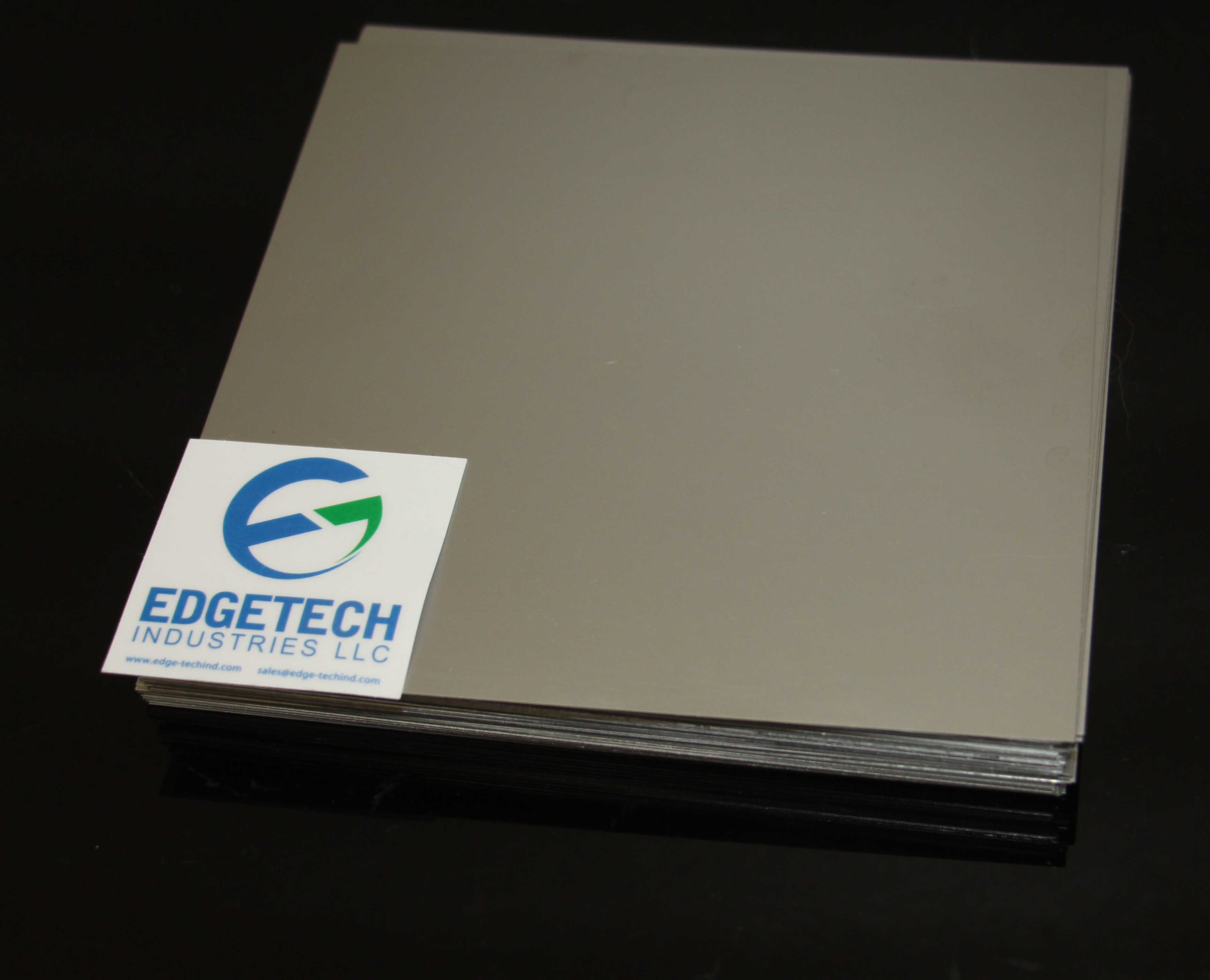

Nitinol Sheet Specifications: Composition, Tolerances, Mechanical Properties, an
Nitinol sheet is one of the most precisely engineered materials in the modern metals industry. Because its performance depends on exact transformation temperatures and accurate mechanical behavior, every specification—from alloy composition to surface roughness—affects reliability.
For engineers, buyers, and medical device designers, understanding Nitinol sheet specifications is essential for selecting the correct grade.
Chemical Composition: Ni–Ti Balance Controls Everything
Nitinol is defined by a near-equiatomic ratio of nickel and titanium:
Nickel (Ni): 54–57%
Titanium (Ti): balance
A variation as small as ±0.1% Ni can shift transformation temperatures by 10–20°C, altering:
superelasticity
stiffness
recovery characteristics
shape-memory response
This is why high-end suppliers use ±0.02% precision.
Standard Thickness Range
Nitinol sheet is commonly supplied in:
Thin sheet:0.05–0.2 mm
Standard sheet:0.2–2 mm
Thick sheet:2–4 mm (less common)
Tolerances vary by grade:
| Thickness | Tolerance |
|---|---|
| 0.05–0.2 mm | ±0.005 mm |
| 0.2–1 mm | ±0.01 mm |
| 1–2 mm | ±0.02 mm |
Precision is essential for stents, surgical tools, and aerospace actuators.
Transformation Temperature Specifications
Typical values:
Austenite finish (Af):−20°C to +120°C
Martensite start (M_s):−80°C to +50°C
Applications determine the required Af:
Medical superelastic: Af = 10–25°C
Aerospace actuation: Af = 60–90°C
Industrial valves: Af = 80–120°C
Custom Af is available through controlled annealing.
Mechanical Properties
Typical values:
Tensile Strength: 895–1400 MPa
Yield Strength: 195–560 MPa
Elongation: 10–30%
Hardness: 20–40 HRC
Nitinol’s mechanical behavior is nonlinear due to phase transformation—unlike steel or titanium.
Surface Roughness Standards
Surface finish affects fatigue life and corrosion resistance.
Polished: Ra < 0.2 µm
Electropolished: Ra < 0.1 µm
Laser-cut raw edges: require additional treatment
Medical devices require mirror-grade surfaces.
Conclusion
Specifications define Nitinol sheet’s behavior. Engineers must evaluate composition, transformation temperatures, tolerances, and surface finish to ensure optimal performance in their application.