
Non-ferrous Metals
Metal Capillary
Advanced Ceramics
Boron Nitride Ceramic
Pyrolytic Boron Nitride
Silicon Nitride Ceramic
Aluminum Nitride Ceramic
Zirconia Ceramic
Alumina Ceramic
Silicon Carbide Ceramic
Deposition Materials
Semimetal Elements
Functional Materials
Neodymium Magnets
Neodymium Disc Magnets
Neodymium Cylinder Magnets
Neodymium Block Magnets
Neodymium Ring Magnets
Neodymium Countersunk Magnets
Magnetic Assemblies
Arc Magnets
Custom Shaped Magnets
Rare Earth Elements
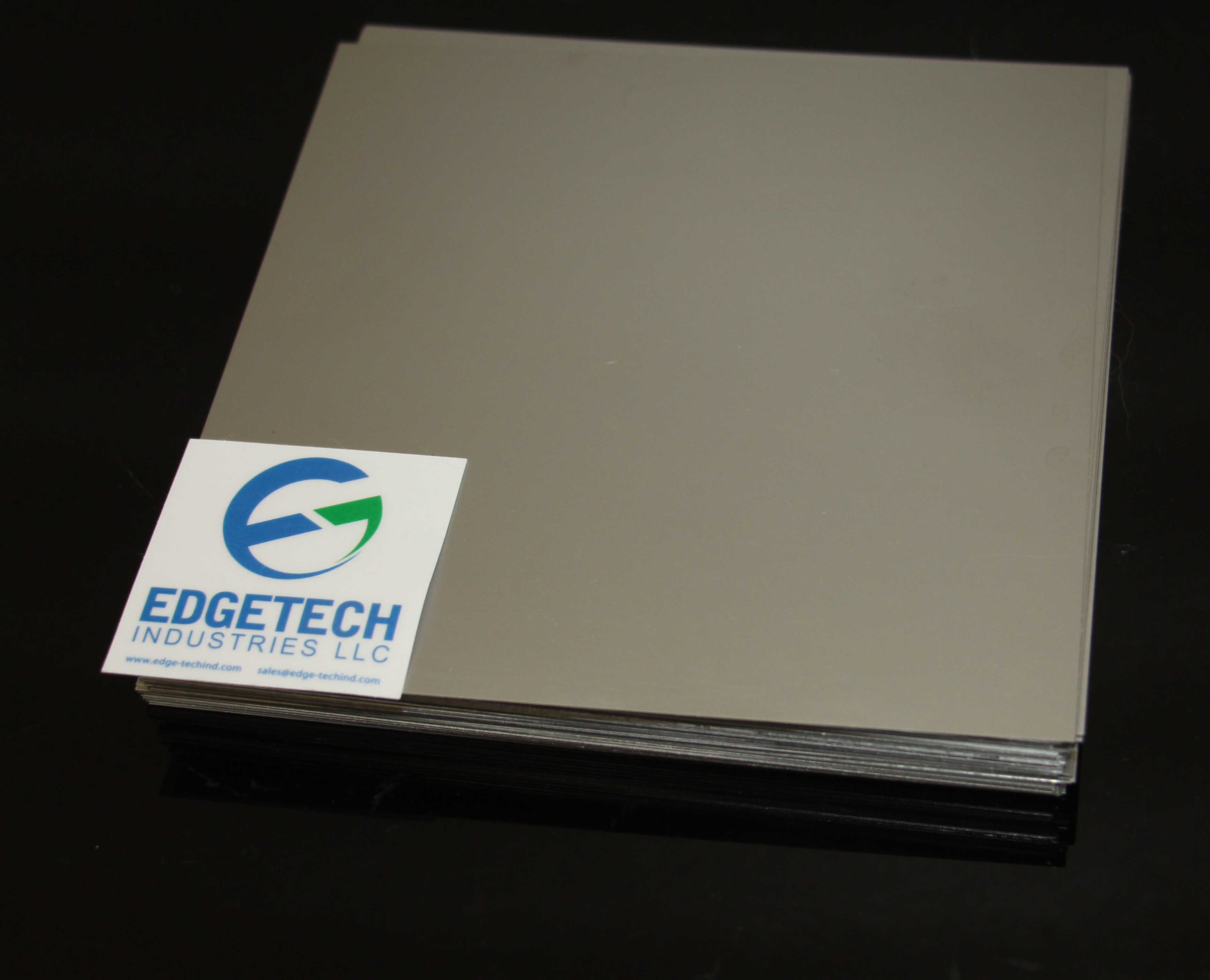

Edgetech’s Guide to Nitinol Sheets: Smart Materials for a Smarter Future
If there’s one material that truly blurs the line between science and engineering, it’s Nitinol — a smart alloy made of nickel and titanium. Known for its ability to “remember” shapes and return to them with heat, Nitinol has become one of the most important materials in modern manufacturing.
At Edgetech, we work closely with this remarkable alloy every day. In this guide, we’ll explore what Nitinol sheets are, how they’re made, and why they’re transforming industries from healthcare to aerospace.
What Exactly Is Nitinol?
Nitinol stands for Nickel Titanium Naval Ordnance Laboratory, the U.S. facility where it was first discovered. Chemically, it’s roughly 50% nickel and 50% titanium — a balance that gives it its shape memory and superelasticity. In sheet form, Nitinol combines strength, flexibility, and intelligence in one alloy.
The Defining Features of Nitinol Sheets
Shape Memory Effect
When cooled and deformed, Nitinol can return to its original shape when heated. This makes it ideal for applications like self-expanding stents or temperature-sensitive actuators.
Superelasticity
Above its transformation temperature, Nitinol behaves like a hyper-flexible spring — stretching up to 8% and bouncing back without permanent deformation.
Biocompatibility and Corrosion Resistance
Thanks to its titanium oxide surface, Nitinol sheets resist corrosion and are biocompatible, making them suitable for long-term medical implants.
High Fatigue Resistance
Nitinol’s fatigue life surpasses that of most traditional metals, maintaining stability under millions of stress cycles.
Tunable Transformation Temperatures
By adjusting the nickel-titanium ratio or heat treatment, manufacturers can set the activation temperature from -50°C to +100°C, depending on application needs.
How Nitinol Sheets Are Made
Producing Nitinol sheets requires precision at every step:
Alloy Melting: Pure nickel and titanium are melted in a vacuum to prevent contamination.
Hot Working: The alloy is forged and rolled to improve homogeneity.
Cold Rolling: Sheets are thinned and strengthened through controlled deformation.
Heat Treatment: Specific heating and cooling define the shape memory and mechanical response.
Surface Finishing: Chemical etching and electropolishing enhance corrosion resistance.
Quality Control: Each batch is tested for composition, transformation temperature, and mechanical stability.
Where Nitinol Sheets Are Used
Medical Devices
Nitinol sheets are used in stents, guidewires, orthodontic devices, and surgical tools. Their ability to expand or change shape at body temperature enables minimally invasive treatments.
Aerospace and Defense
In aerospace, Nitinol acts as a lightweight, self-healing material for actuators, vibration dampers, and deployable structures.
Robotics and Automation
Thin Nitinol sheets function as “artificial muscles” in robots, allowing precise and silent movement triggered by heat or electricity.
Consumer Electronics
With the rise of foldable devices and wearable tech, Nitinol’s flexibility and durability make it a go-to material for hinges and connectors.
Industrial and Energy Systems
Nitinol is used in valves, couplings, and thermal control mechanisms that automatically respond to temperature changes.
Challenges and Opportunities
While Nitinol offers unique advantages, it’s also challenging to process. Precision control of heat treatment and composition is vital to ensure consistent performance. At Edgetech, we continuously refine our production methods to deliver Nitinol sheets that meet strict performance standards across industries.
Looking Ahead
With advances in 3D printing and laser micromachining, Nitinol’s potential continues to grow. Its integration into smart systems, medical robotics, and aerospace technologies points toward a more adaptive future.
At Edgetech, we view Nitinol not just as a metal, but as a foundation for intelligent design — where materials can think, respond, and evolve with their environment.
Final Thoughts
Nitinol’s blend of shape memory, superelasticity, and resilience makes it a cornerstone of smart material innovation. From life-saving medical implants to high-performance aerospace systems, it’s reshaping how engineers think about metal.
Learn more about Edgetech’s Nitinol products and services.