
Non-ferrous Metals
Metal Capillary
Advanced Ceramics
Boron Nitride Ceramic
Pyrolytic Boron Nitride
Silicon Nitride Ceramic
Aluminum Nitride Ceramic
Zirconia Ceramic
Alumina Ceramic
Silicon Carbide Ceramic
Deposition Materials
Semimetal Elements
Functional Materials
Neodymium Magnets
Neodymium Disc Magnets
Neodymium Cylinder Magnets
Neodymium Block Magnets
Neodymium Ring Magnets
Neodymium Countersunk Magnets
Magnetic Assemblies
Arc Magnets
Custom Shaped Magnets
Rare Earth Elements
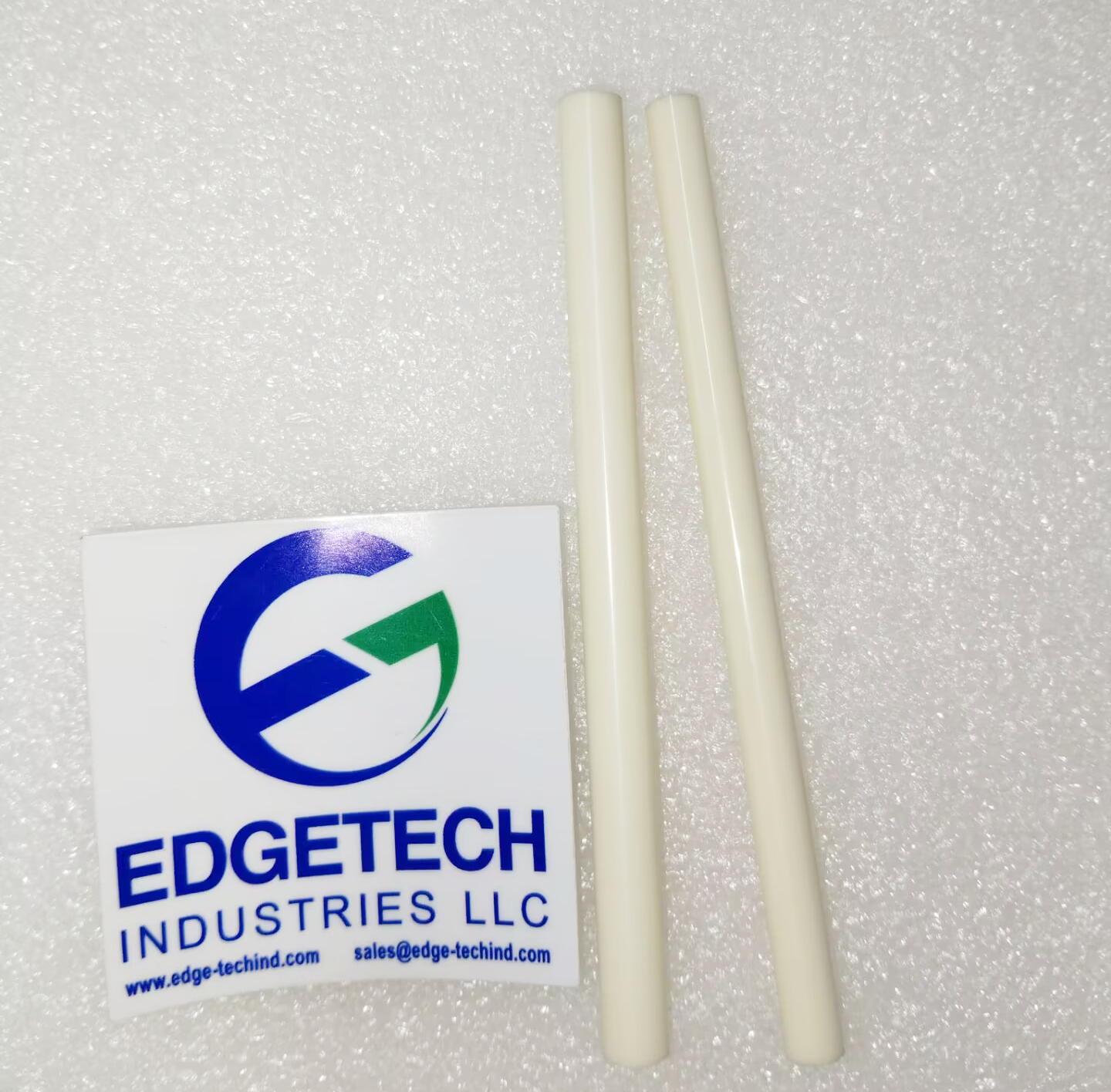

Alumina Rod
Alumina ceramics are the most widely used functional ceramics. The key properties of this material include high hardness and good wear resistance; therefore, it is not easily damaged by friction or use. In addition, it can withstand high temperatures for a long time and has a high degree of corrosion resistance. The electrical insulation properties of alumina ceramics are particularly outstanding at high temperatures. However, the disadvantage of Alumina Rods is that they have low thermal shock resistance and cannot withstand rapid temperature changes. Another important property of alumina is that it is chemically inert, will not be corroded by water or steam, and has good resistance to acids and alkalis.
Alumina processing methods include isostatic and dry pressing, low-pressure injection molding, extrusion, grouting, and CNC machining. Alumina rods can be processed for applications that require high-temperature insulation or thermal shock resistance. A variety of ceramic processing methods, including machining or final forming, can be used to produce parts of various sizes and shapes.
Regular Size of alumina rods: Dia >0.5mm, Length ≤200mm
Specifications of Alumina Rod
| Item | Unit | Al2O3 |
| Physical Property | ||
| Color | Ivory | |
| Density | g/cm3 | 3.7-3.9 |
| Purity | % | 95~99.8 |
| Gas Permeability | 0 | |
| Water Absorption | 0% | |
| Mechanical Properties | ||
| Vickers Hardness | GPa | 12.3-17.2 |
| Flexural Strength | MPa | 300-380 |
| Compressive Strength (HV0.5) | MPa | 2000-2350 |
| Elastic modulus | GPa | 270-380 |
| Fracture Toughness | MPam1/2 | 3.5-4 |
| Thermal Properties | ||
| The Max Working Temperature | ℃ | 1650 |
| Thermal Conductivity at room temperature | W/(m·K) | 20-32 |
| Coefficient of Thermal Expansion | 10-6/℃ | 6.5-7.2 |
| Thermal Shock Resistance | △T℃ | 200 |
| Electrical Properties | ||
| Dielectric Strength | KV/mm | 10-15 |
| Dielectric Constant | 9-10 | |
| Dielectric Loss Angle(1MHz) | 0.0002-0.0003 | |
| Volume Resistivity | Ω·cm | >1014 |
The above chart just demonstrates the typical properties of common alumina ceramic we use to produce our alumina parts. Please notice that the properties of customized alumina parts vary due to different processing. Edgetech Industries, Advanced Ceramics Division provides alumina products according to your specified instructions or does its best to meet requirements.
-
 Boron Nitride Tube
 -
 BN Tubes
Application of alumina rods
-Insulation parts
-Wear parts
-General machinery and hydraulic parts
-Mechanical bearing parts
Packing of alumina ceramics
As a ceramic material, Alumina rods are quite fragile in a lot of cases. Our Alumina Ceramics are carefully handled to minimize damage during storage and transportation. Suitable outer boxes and inner cushioning materials are used, and vacuum packing is also engaged for some of the parts.