
Non-ferrous Metals
Metal Capillary
Advanced Ceramics
Boron Nitride Ceramic
Pyrolytic Boron Nitride
Silicon Nitride Ceramic
Aluminum Nitride Ceramic
Zirconia Ceramic
Alumina Ceramic
Silicon Carbide Ceramic
Deposition Materials
Semimetal Elements
Functional Materials
Neodymium Magnets
Neodymium Disc Magnets
Neodymium Cylinder Magnets
Neodymium Block Magnets
Neodymium Ring Magnets
Neodymium Countersunk Magnets
Magnetic Assemblies
Arc Magnets
Custom Shaped Magnets
Rare Earth Elements
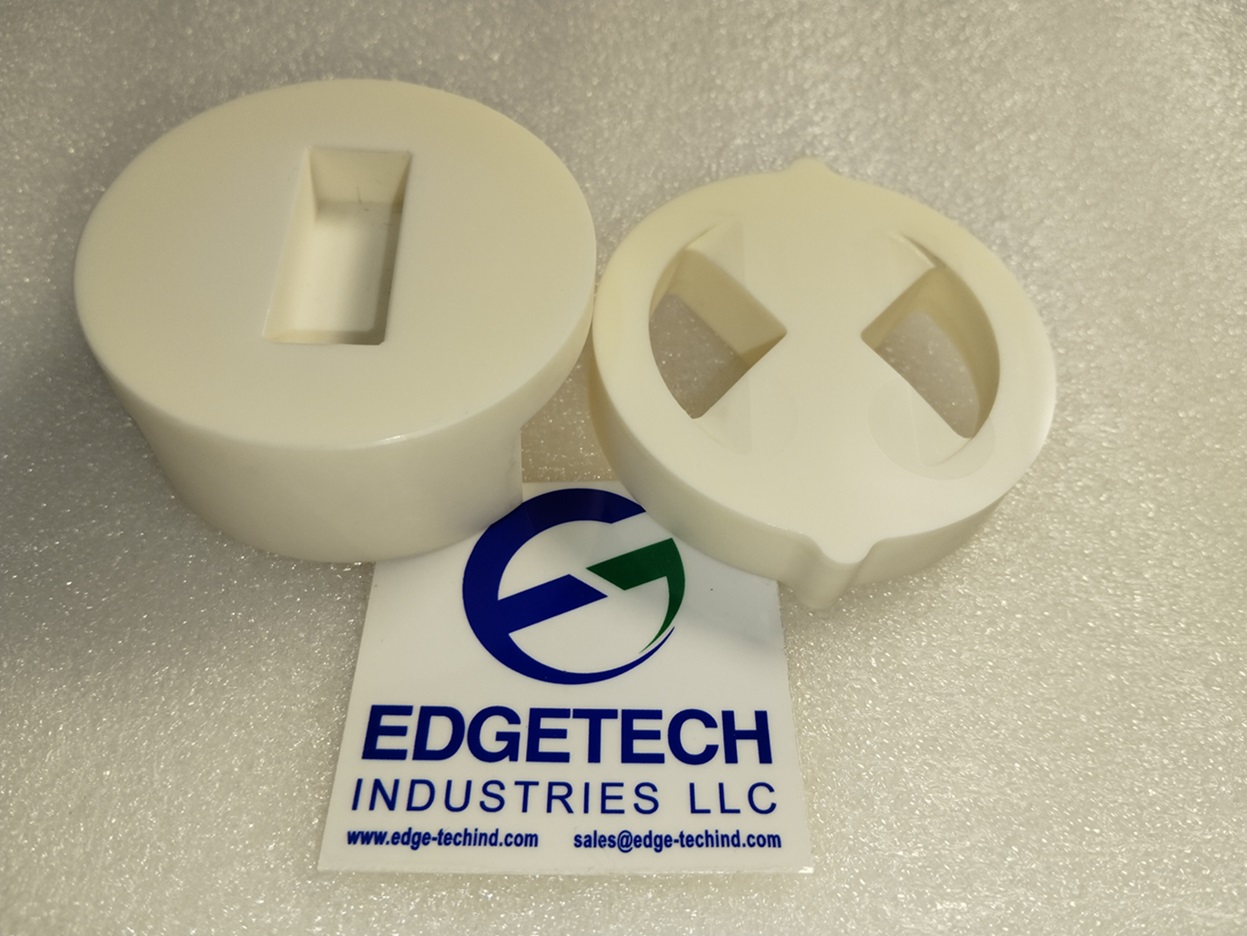

Alumina Ceramic Rotor
Alumina ceramic rotors and Stators have the characteristics of high hardness and high strength and can withstand greater pressure and friction. It also has good wear resistance and corrosion resistance and can work stably in harsh environments. Moreover, it is light in weight and has a small moment of inertia, which can effectively improve the operating efficiency of the equipment.
Stators and rotors need to be processed with wear-resistant materials to ensure the long-term stability and durability of the product, so that the product is stable during the transportation process, reducing energy consumption and maintenance costs. The perfect sealing system is achieved by the precise fit between the rotor and the stator. Therefore, both components must withstand strong mechanical stress and chemical corrosion. To ensure the reliability and long service life of the valve, the most important parameters are: leak-free sealing, minimum adhesion, and minimum wear. Alumina ceramic stators and rotors are your ideal choice.
Edgetech provides ceramic rotors and stators, which can be slotted, drilled, stepped, polished, etc. according to your drawing.
Typical characteristic parameters for Ceramic Rotor and Stator
Outer diameter: < 90.00 mm
Thickness: < 25.00 mm
Surface finish
Aluminum oxide 99%: Ra0.1-0.3µm
Zirconium oxide: Ra0.025 µm
Property of Alumina Ceramic
| Item | Unit | Al2O3 |
| Physical Property | ||
| Color | Ivory | |
| Density | g/cm3 | 3.7-3.9 |
| Purity | % | 95~99.8 |
| Gas Permeability | 0 | |
| Water Absorption | 0% | |
| Mechanical Properties | ||
| Vickers Hardness | GPa | 12.3-17.2 |
| Flexural Strength | MPa | 300-380 |
| Compressive Strength (HV0.5) | MPa | 2000-2350 |
| Elastic modulus | GPa | 270-380 |
| Fracture Toughness | MPam1/2 | 3.5-4 |
| Thermal Properties | ||
| The Max Working Temperature | ℃ | 1650 |
| Thermal Conductivity at room temperature | W/(m·K) | 20-32 |
| Coefficient of Thermal Expansion | 10-6/℃ | 6.5-7.2 |
| Thermal Shock Resistance | △T℃ | 200 |
| Electrical Properties | ||
| Dielectric Strength | KV/mm | 10-15 |
| Dielectric Constant | 9-10 | |
| Dielectric Loss Angle(1MHz) | 0.0002-0.0003 | |
| Volume Resistivity | Ω·cm | >1014 |
-
 Boron Nitride Tube
 -
 BN Tubes
Application of alumina rotors
Ceramic Rotors and stators can be used in valves required in various high-tech applications, such as HPLC, micro-HPLC, medical industry, etc. In the motor industry, it can improve motor efficiency. In chemical equipment, it is used for agitator rotors due to its corrosion resistance. In electronic equipment, it is used as a heat dissipation component. In medical equipment, it is used for some high-precision rotating equipment due to its high hardness, wear resistance, and good chemical stability.
Packing of alumina ceramics
Alumina ceramic Rotors and Stators use appropriate outer boxes and internal buffer materials, and some components are also vacuum-packed.