
Non-ferrous Metals
Metal Capillary
Advanced Ceramics
Boron Nitride Ceramic
Pyrolytic Boron Nitride
Silicon Nitride Ceramic
Aluminum Nitride Ceramic
Zirconia Ceramic
Alumina Ceramic
Silicon Carbide Ceramic
Deposition Materials
Semimetal Elements
Functional Materials
Neodymium Magnets
Neodymium Disc Magnets
Neodymium Cylinder Magnets
Neodymium Block Magnets
Neodymium Ring Magnets
Neodymium Countersunk Magnets
Magnetic Assemblies
Arc Magnets
Custom Shaped Magnets
Rare Earth Elements
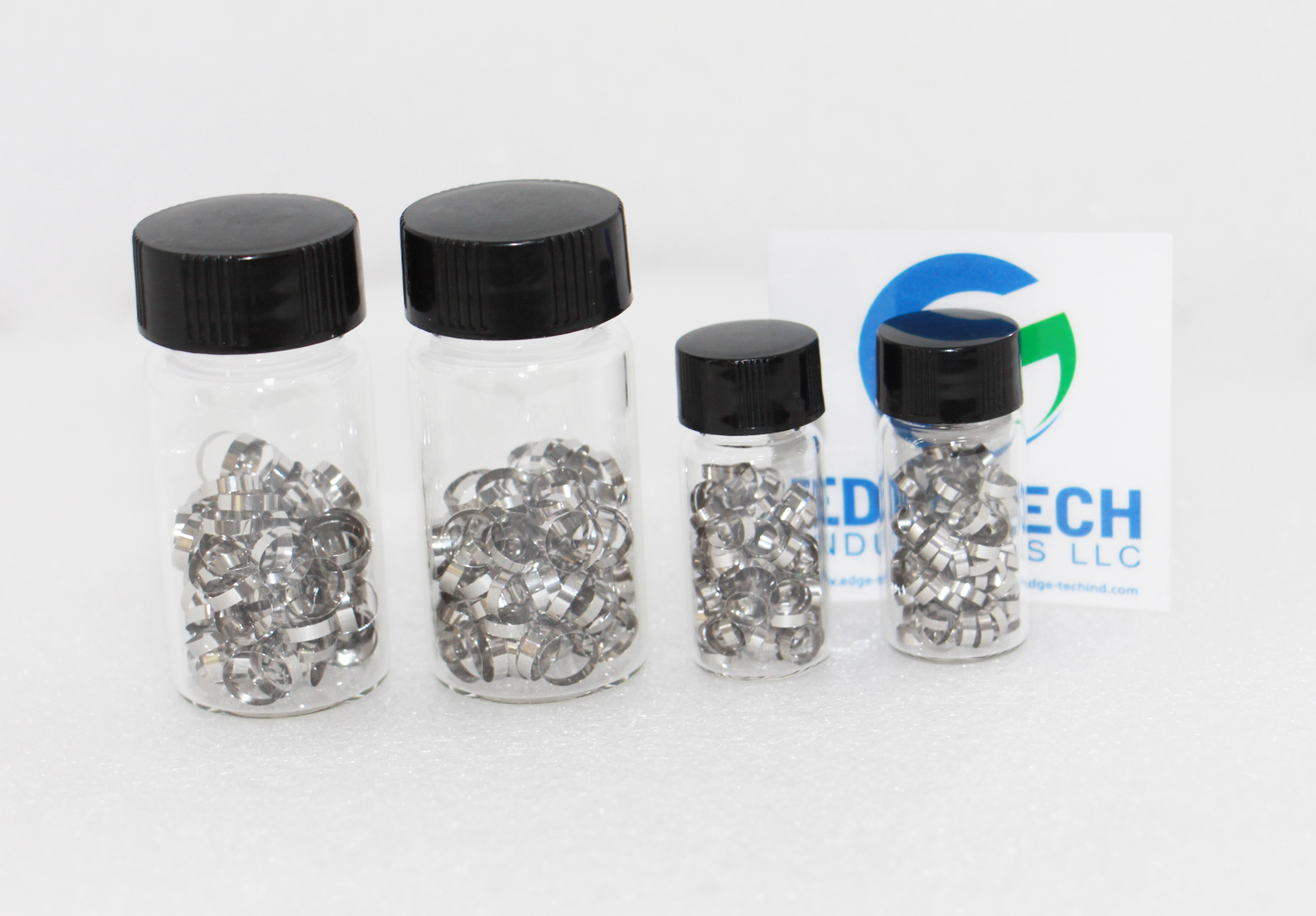

Main processes and common problem solutions for titanium rings used in surgical
As key components in surgical implants (such as artificial joints, bone fixation rings, etc.) or high-end industrial fields, the production process of titanium rings must strictly follow ISO 5832-2 and other standards to ensure material purity, mechanical properties, and biocompatibility. Detailed production process flow and key control points of titanium rings (taking Ti-6Al-4V ELI as an example):
1. Material selection and pretreatment
1.1 Raw material requirements
Composition control: Ti-6AI-4V ELI alloy that complies with ISO 5832-2
Morphology selection: Usually vacuum melted (VAR) titanium ingots are used, which are forged or rolled into titanium rods or cakes as ring-blank raw materials.
1.2 Billet preparation
Cutting and blanking: Titanium rods or cakes are made into ring blanks by wire cutting or sawing, and the size allowance is controlled (about 5-10% of the outer diameter allowance).
Surface cleaning: Pickling to remove oxide scale (HF+HNO3 mixture) to avoid subsequent processing contamination.
2. Main production process flow
2.1 Hot forming process
(1) Forging/rolling ring (applicable to large-sized titanium rings)
Heating temperature: keep below the β phase transformation point (usually 900-950℃) to avoid grain coarsening.
Ring rolling process: use a radial-axial ring rolling machine to control the uniformity of wall thickness through multiple rolling passes, and the deformation amount is ≤70%.
Cooling method: air cooling or temperature-controlled slow cooling to avoid residual stress.
(2) Powder metallurgy (applicable to small-sized rings with complex shapes)
Powder preparation: prepare high-purity titanium alloy powder (particle size 15-45μm) by plasma rotating electrode (PREP) or gas atomization method.
Cold isostatic pressing: form into ring blanks under a pressure of 200-300 MPa.
Sintering: vacuum sintering (1200-1300℃/2-4h), density ≥99.5%.
2.2 Cold forming process (thin-walled precision titanium ring): Cold rolling/spinning
(1) Intermediate annealing: When the cold rolling deformation reaches 30%, annealing (700-800℃/1h) is required to eliminate work hardening.
Spinning: The titanium plate blank is gradually spun into a thin-walled ring by a CNC spinning machine, with a wall thickness tolerance of ±0.05mm.
(2) Machining
Turning/milling: Use carbide or PCD tools, low speed and high feed (to avoid tool adhesion), and the coolant must be a chlorine-free oil-based medium.
Wire cutting: Precision machining of inner holes and end faces (accuracy ±0.01mm).
3. Heat treatment process
Solution treatment: 930-950℃/1h insulation and water quenching to obtain a fine-grained β matrix.
Aging treatment: 500-600℃/2-4h air cooling to precipitate secondary α phase and improve strength (tensile strength ≥860 MPa).
Stress relief annealing: After cold working, annealing at 550-650℃/1-2h is required to eliminate residual stress.
4. Surface treatment
Electrolytic polishing: Electropolishing in an acidic electrolyte (such as H2SO4+CH3COOH), surface roughness Ra≤0.4μm.
Passivation treatment: Soak in nitric acid (20-40% concentration) to form a dense TiO2 oxide film to improve corrosion resistance.
Sandblasting (optional): Used for roughening the surface of bone implants (Ra 2-4μm) to promote bone cell attachment.
5. Common problems and solutions
5.1 Oval deformation of ring parts
Cause: Uneven stress release during rolling or heat treatment.
Measures: Use fixture shaping annealing, or add finishing rolling process.
5.2 Surface microcracks
Cause: Excessive cold working deformation or insufficient annealing.
Measures: Control the single cold deformation to ≤20%, and add pickling to relieve the stress layer before annealing.
Edgetech Industries LLC provides a variety of commercially pure Titanium and Titanium alloys in wire, sheet, bar, tube, and other forms. Titanium expanded/stamped mesh and titanium wire mesh are also available.