
Non-ferrous Metals
Metal Capillary
Advanced Ceramics
Boron Nitride Ceramic
Pyrolytic Boron Nitride
Silicon Nitride Ceramic
Aluminum Nitride Ceramic
Zirconia Ceramic
Alumina Ceramic
Silicon Carbide Ceramic
Deposition Materials
Semimetal Elements
Functional Materials
Neodymium Magnets
Neodymium Disc Magnets
Neodymium Cylinder Magnets
Neodymium Block Magnets
Neodymium Ring Magnets
Neodymium Countersunk Magnets
Magnetic Assemblies
Arc Magnets
Custom Shaped Magnets
Rare Earth Elements
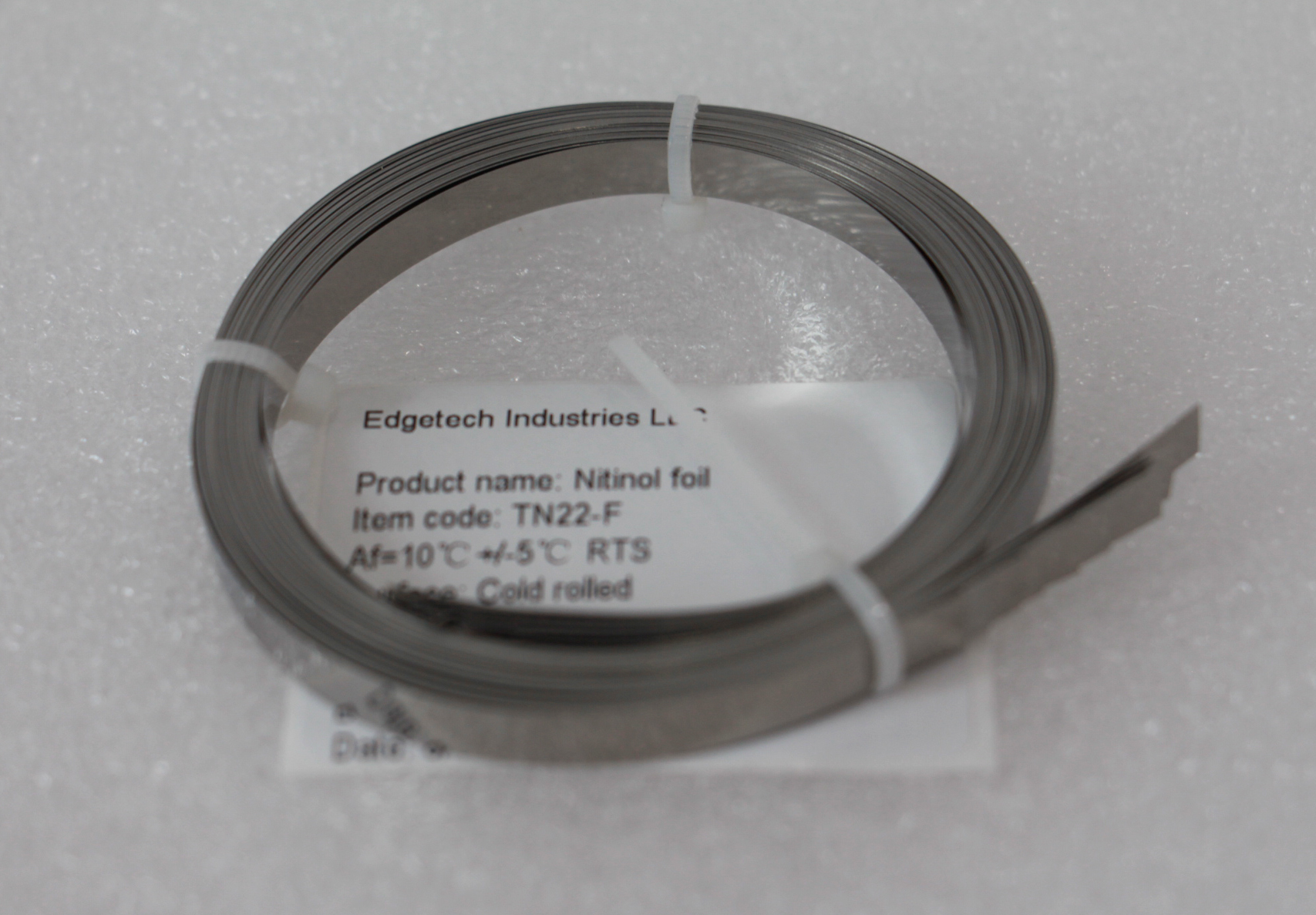

Flexible robot fingers (Nitinol shape memory alloy)
The technique uses a pulsed laser to deposit thin films of metals such as nickel, titanium or copper layered on a transparent polymer onto a substrate. So the technique can print various metal films onto the [receiver] substrate layer by layer, like an old-fashioned typewriter ribbon, so maybe three layers of titanium, four layers of nickel and one layer of copper are laid down. In this way, the process can build up three-dimensional elements, which the team describes as voxels, made up of layers of different metals. The material can then be heat-treated to carefully control the diffusion process between the metal layers in each voxel, allowing researchers to precisely control the composition of the material.
By adding voxels together, researchers can build 3D microstructures with different properties at specific points in the material. So some parts of the device might be shape memory alloys, some parts won& #39;t have that effect, and some parts will have shape memory alloys that operate at different temperatures.