
Non-ferrous Metals
Metal Capillary
Advanced Ceramics
Boron Nitride Ceramic
Pyrolytic Boron Nitride
Silicon Nitride Ceramic
Aluminum Nitride Ceramic
Zirconia Ceramic
Alumina Ceramic
Silicon Carbide Ceramic
Deposition Materials
Semimetal Elements
Functional Materials
Neodymium Magnets
Neodymium Disc Magnets
Neodymium Cylinder Magnets
Neodymium Block Magnets
Neodymium Ring Magnets
Neodymium Countersunk Magnets
Magnetic Assemblies
Arc Magnets
Custom Shaped Magnets
Rare Earth Elements
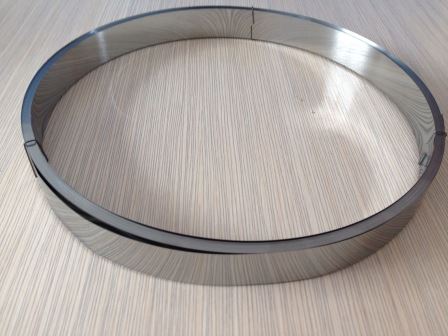

Features of Molybdenum Sheets and Application Scenarios for Different Thicknesse
Molybdenum sheets are flat products made from metallic molybdenum (Mo) through rolling, forging, and related forming processes. Thanks to molybdenum’s unique physical and chemical properties, these sheets play an important role across many industrial sectors. Below is a detailed overview of their key characteristics and the typical uses associated with different thickness ranges.
I. Core Characteristics of Molybdenum Sheets
The performance of molybdenum sheets is rooted in the intrinsic properties of the metal itself. Their features can be grouped into three main categories: physical, chemical, and processing-related qualities.
1. Physical Properties
Extremely high melting point and thermal stability
Molybdenum melts at around 2620°C, far exceeding common metals such as iron and nickel. Even above 1000°C, it maintains excellent mechanical strength; at 1600°C, it can still retain more than half of its room-temperature strength. This makes it one of the most reliable structural materials for high-temperature environments.
Strong thermal and electrical conductivity
With a thermal conductivity of roughly 138 W/(m·K) at room temperature and an electrical conductivity about 35% that of copper, molybdenum offers far better performance than stainless steels. It is widely used where rapid heat transfer or stable electrical conduction is required.
Low thermal expansion and high dimensional stability
Its thermal expansion coefficient is relatively small (~5.1×10⁻⁶/°C), aligning closely with ceramics such as alumina or zirconia. This compatibility allows molybdenum to serve as a transition or bonding layer to reduce thermal-stress-induced cracking.
High strength and wear resistance
With a tensile strength around 500–700 MPa and a hardness of Hv 150–200, molybdenum exhibits strong wear resistance, making it suitable for structural or wear-resistant components.
2. Chemical Properties
Good resistance to corrosion
At room temperature, molybdenum does not oxidize easily in air. It withstands non-oxidizing acids (such as hydrochloric acid or dilute sulfuric acid), alkaline solutions, and most organic solvents. However, it is vulnerable to strongly oxidizing media such as concentrated nitric acid or aqua regia.
Excellent vacuum stability
Molybdenum has extremely low vapor pressure at elevated temperatures, producing minimal volatile contaminants. This makes it ideal for aerospace applications and high-vacuum devices.
3. Processing Characteristics
Challenging but controllable workability
Molybdenum is inherently brittle at room temperature and can crack during cold-working. To improve ductility, it requires high-temperature rolling and intermediate annealing.
Thin sheets (<0.1 mm) can be rolled to achieve very precise tolerances (±0.001 mm), while thicker sheets rely more on forging or powder-metallurgy forming.
II. Application Scenarios for Different Thickness Ranges
The thickness of a molybdenum sheet directly affects its mechanical behavior, flexibility, dimensional accuracy, and end-use suitability. Thickness generally ranges from ultra-thin (0.01 mm) to thick plates exceeding 10 mm.
1. Ultra-thin Sheets (0.01–0.1 mm)
Key strengths:
High flexibility, excellent dimensional accuracy, and large surface-to-volume ratio.
Typical applications:
Semiconductor and electronics
Used as electrode leads, grid components, or cathode supports in vacuum tubes thanks to its conductivity and vacuum stability.
Base layers for coating targets
Applied as substrates for ultra-thin sputtering targets used to deposit conductive or wear-resistant films on glass or polymer surfaces.
Precision sensors
Serves as a sensing element in high-temperature sensors, such as resistance-type temperature detectors.
2. Thin Sheets (0.1–1 mm)
Key strengths:
Balanced strength and ductility; suitable for large-area fabrication.
Typical applications:
Heat-spreading components
Used in LED modules or power devices, providing efficient thermal dissipation while costing less than copper.
Photovoltaics
Functions as an electrode tab in certain solar cell structures due to its corrosion resistance and thermal compatibility with silicon.
Electromagnetic shielding
Used in precision instruments to block EM interference.
3. Medium-thickness Sheets (1–5 mm)
Key strengths:
High load-bearing capacity and excellent performance at elevated temperatures.
Typical applications:
High-temperature furnace components
Used as heating elements or support plates in vacuum or sintering furnaces; can operate up to ~1800°C.
Aerospace parts
Serves as a liner for rocket engine nozzles or as a transition layer in thermal-protection structures.
Mold accessories
Acts as a heat-conductive pad in high-temperature die-casting molds to improve cooling efficiency.
4. Thick Sheets (>5 mm)
Key strengths:
Exceptional strength and wear resistance; suitable for heavy loads or impact environments.
Typical applications:
Wear-resistant components for heavy machinery
Applied as liners in mills or crushers, offering significantly better durability than high-chromium steel.
High-temperature glass-forming molds
Withstands molten-glass conditions without sticking.
Nuclear industry components
Used as shielding plates or structural supports due to its radiation resistance and high-temperature reliability.