
Non-ferrous Metals
Metal Capillary
Advanced Ceramics
Boron Nitride Ceramic
Pyrolytic Boron Nitride
Silicon Nitride Ceramic
Aluminum Nitride Ceramic
Zirconia Ceramic
Alumina Ceramic
Silicon Carbide Ceramic
Deposition Materials
Semimetal Elements
Functional Materials
Neodymium Magnets
Neodymium Disc Magnets
Neodymium Cylinder Magnets
Neodymium Block Magnets
Neodymium Ring Magnets
Neodymium Countersunk Magnets
Magnetic Assemblies
Arc Magnets
Custom Shaped Magnets
Rare Earth Elements
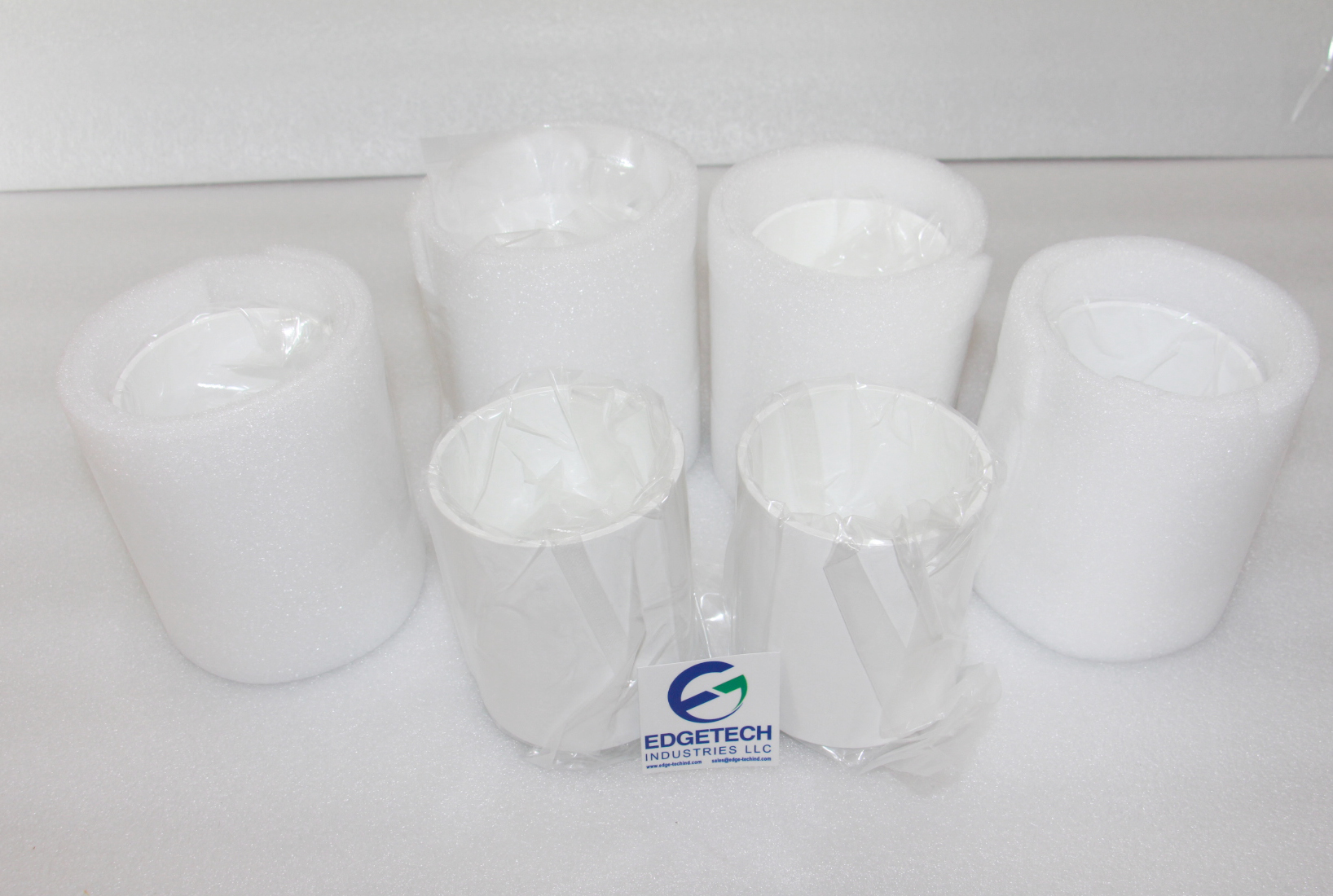

Boron nitride tube - BN Ceramic Sleeve
Our Boron Nitride Tubeis made of vacuum hot pressing equipment and has excellent electrical properties. It has good high-temperature insulation and will not drop significantly with the temperature increase. The breakdown voltage is about 3-4 times that of alumina ceramics. Moreover, the boron nitride tube is resistant to high temperatures. The temperature resistance can reach 900 degrees Celsius in an oxidizing atmosphere and 2100 degrees Celsius in an inert atmosphere. At the same time, it also has extreme thermal shock resistance. It will not crack even if rapidly cooled and heated from 1000 degrees Celsius to room temperature within 15 minutes and repeated 100 times. Therefore, boron nitride ceramics are suitable for applications in high-temperature environments, such as heat treatment furnaces, high-temperature electric furnace components, high-temperature insulating sleeves, etc. as structural and insulating components.
The following is a comparison of the performance of boron nitride ceramics and alumina ceramics:
Advantages of boron nitride ceramics relative to alumina ceramics
1. The maximum operating temperature of boron nitride ceramics under atmospheric protection can reach 2100 degrees, while that of alumina ceramics does not exceed 1700 degrees.
2. Boron nitride ceramics have better thermal shock resistance than alumina ceramics. Boron nitride ceramics will not crack when experiencing rapid temperature rise and fall, and will not crack when taken out of a 1000-degree Celsius furnace for air quenching 100 times in a row. Alumina ceramics are easily broken when the operating temperature rises or falls rapidly.
3. The electrical insulation strength of boron nitride ceramics is 3-4 times that of alumina ceramics.
4. Boron nitride ceramics do not react or bond with glass or metal and are used as containers such as high-temperature sintering or melting crucibles and setters.
Disadvantages of boron nitride ceramics
1. The strength, hardness, and wear resistance of boron nitride ceramics are lower than those of alumina ceramics and unsuitable for use under vibration and friction conditions.
2. The operating temperature of boron nitride ceramics in air does not exceed 900 degrees Celsius, and oxidation may occur above 900 degrees.
Edgetech Industries LLCis a supplier of advanced ceramics. Our boron nitride ceramic sleeves have become indispensable materials in semiconductor, aerospace, and high-temperature industrial applications due to their high-temperature stability, excellent electrical insulation, and good thermal management capabilities. Its design and material characteristics make it particularly important in modern technological applications that require high reliability and precise control, providing an ideal solution for precision equipment in various extreme environments.