
Non-ferrous Metals
Metal Capillary
Advanced Ceramics
Boron Nitride Ceramic
Pyrolytic Boron Nitride
Silicon Nitride Ceramic
Aluminum Nitride Ceramic
Zirconia Ceramic
Alumina Ceramic
Silicon Carbide Ceramic
Deposition Materials
Semimetal Elements
Functional Materials
Neodymium Magnets
Neodymium Disc Magnets
Neodymium Cylinder Magnets
Neodymium Block Magnets
Neodymium Ring Magnets
Neodymium Countersunk Magnets
Magnetic Assemblies
Arc Magnets
Custom Shaped Magnets
Rare Earth Elements
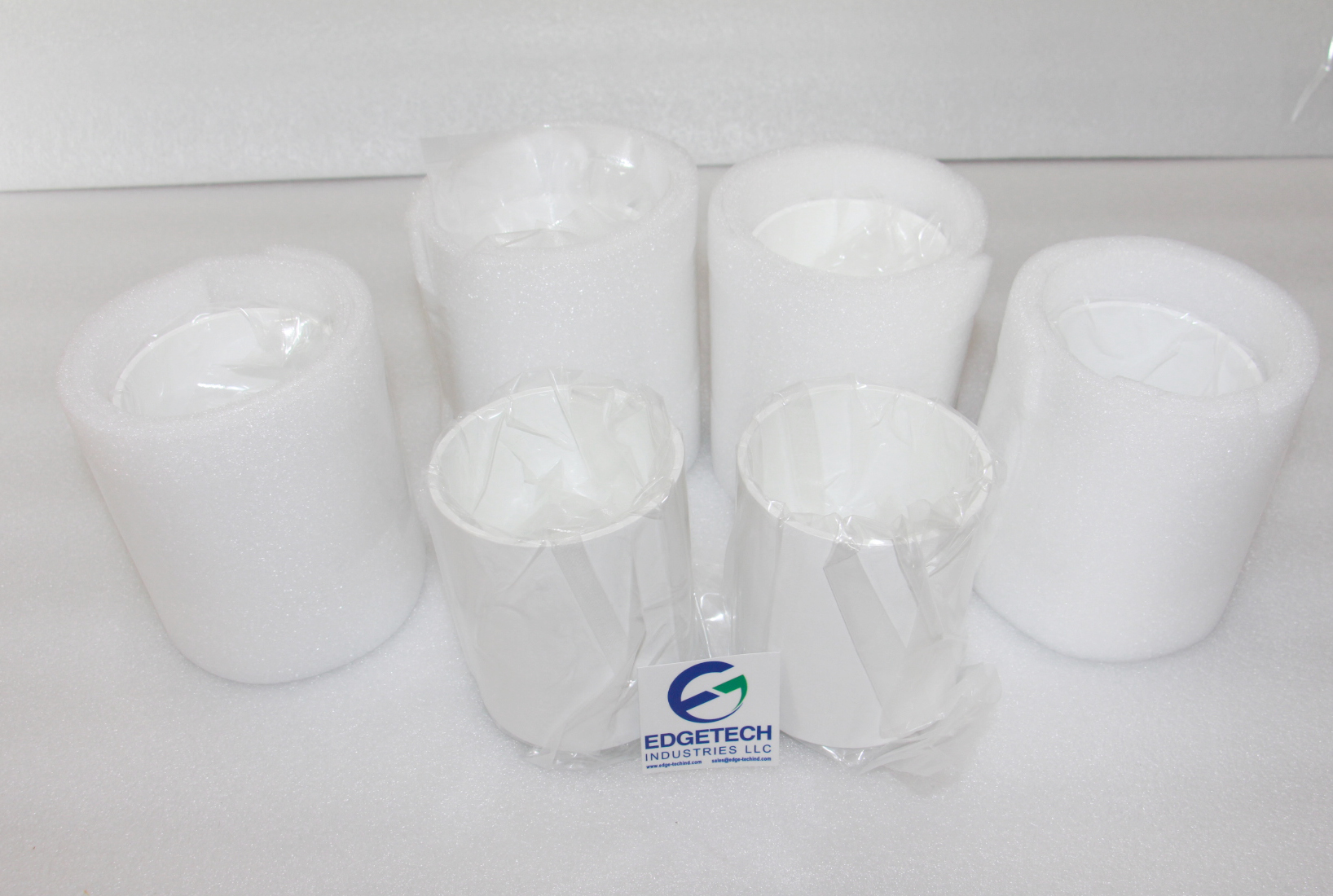

Boron Nitride Crucible: A Practical Engineer’s Guide to Performance, Processing,
Hexagonal boron nitride has quietly become one of the most dependable materials in high-temperature processing. Among its many shapes and formats, the boron nitride crucible stands out for its ability to handle molten metals, aggressive salts, and rapid thermal cycling without reacting or sticking. Engineers who work with aluminum alloys, specialty metals, semiconductor materials, or vacuum deposition equipment tend to regard BN crucibles as a “problem-solving” option when oxide ceramics reach their limits.
This guide focuses on what actually matters when selecting and using boron nitride crucibles—properties that influence performance, how they are manufactured, and what industries rely on them.
1. What Makes a Boron Nitride Crucible Different?
A BN crucible is typically made from hot-pressed hexagonal boron nitride (hBN). The material has a layered crystal structure similar to graphite, but the similarity ends there. Unlike graphite, hBN is:
electrically insulating
chemically inert
resistant to wetting by most molten metals
stable in nitrogen and inert atmospheres up to very high temperatures
These traits give BN crucibles capabilities that alumina, quartz, and even graphite cannot match, especially in environments where purity and non-contamination matter.
2. Key Material Characteristics (Relevant to Real Industrial Use)
2.1 High-Temperature Behavior
Although datasheets often list numbers in ideal conditions, real-world use typically falls within:
up to ~1800°C in nitrogen or argon
around 1000–1200°C in air(BN slowly oxidizes if held too long at high temperatures)
One of the biggest advantages is BN’s ability to tolerate fast heating and cooling without cracking. For processes that involve frequent cycling—batch melting, evaporation steps, or crystal pulling—this is a considerable benefit over alumina.
2.2 Non-Wetting and Chemical Stability
The non-wetting property is what most engineers notice first. Molten aluminum, magnesium, and several precious metals tend to roll off BN surfaces rather than spreading or bonding.
BN crucibles are also resistant to:
fluoride and chloride salt mixtures
metallization pastes
glass melts
reactive alloys (under inert atmospheres)
If an application frequently ruins oxide crucibles due to sticking or contamination, BN usually lasts several times longer.
2.3 Electrical Characteristics
Boron nitride maintains high insulation resistance even at elevated temperatures. This makes BN crucibles compatible with:
induction heating systems (non-conductive)
semiconductor processing chambers
electron-beam evaporation setups
Unlike graphite crucibles, BN does not create stray conduction paths or introduce carbon contamination.
2.4 Precision Machinability
Although BN is a ceramic, it can be machined much like a soft metal. This allows:
thin-wall crucibles
tight tolerances
complex internal channels
smooth interior surfaces that improve melt flow
Many suppliers treat BN like a “machine-from-solid” engineering material rather than a molded ceramic, which opens design possibilities not feasible with alumina or zirconia.
3. How Boron Nitride Crucibles Are Manufactured
Unlike many technical ceramics produced through slip casting or isostatic pressing, BN crucibles follow a different route.
3.1 Powder & Binder Preparation
High-purity hBN powder (typically >99%) is mixed with a small amount of sintering aid. Calcium-based additives are common because they enhance densification without compromising chemical stability.
3.2 Hot-Pressing
BN is hot-pressed in a graphite die under:
high temperature (typically 1700–2000°C)
substantial uniaxial pressure
This method produces:
highly dense blocks or billets
fine, uniform microstructure
consistent thermal and mechanical behavior
No pores or internal channels are left that might trap molten metal, which is part of why BN crucibles are so clean and reliable.
3.3 Final Machining
Once densified, the material is machined into the required crucible geometry. This step gives BN its practical shape and functional surface finish.
4. Performance Compared to Other Crucible Materials
4.1 BN vs Alumina (Al₂O₃)
Where BN excels:
Molten aluminum and magnesium do not stick
Far better thermal shock resistance
Ideal for induction systems
Higher purity for evaporation processes
Where alumina wins:
Stronger in compression
Much cheaper for general furnace operations
Better oxidation resistance in open air
4.2 BN vs Graphite
BN avoids the carbon contamination that graphite inevitably introduces. It also remains insulating at all temperatures, which is critical for some semiconductor equipment.
Graphite is tougher and cheaper but chemically reactive in many alloys.
4.3 BN vs Silicon Nitride / Silicon Carbide
Si₃N₄ and SiC offer outstanding strength and wear resistance. However:
both materials are wetted by many molten metals
neither matches BN’s machinability
BN is far better for purity-sensitive processes
Each ceramic has distinct advantages, but BN dominates where non-wetting and chemical inertness are mandatory.
5. Typical Industrial Applications
BN crucibles appear in multiple industries for specific reasons:
5.1 Metal Melting & Casting
Used for:
aluminum alloys
magnesium alloys
precious metals
salt-flux and glass melts
Their non-wetting behavior reduces inclusions and crucible damage.
5.2 Semiconductor & Electronic Materials
Common in:
evaporation sources
MBE (molecular beam epitaxy)
vacuum processing and insulation parts
BN’s stability and purity make it ideal where contamination cannot be tolerated.
5.3 Crystal Growth
Including:
GaN
SiC
sapphire
various optical crystals
BN crucibles help maintain uniform thermal profiles and prevent unwanted reactions.
6. Choosing the Right BN Crucible
Important factors include:
Purity grade(standard vs high-purity)
Presence of bindersand their compatibility with your melt
Wall thicknessvs heating profile
Atmosphere(BN prefers inert or nitrogen environments)
Machined geometrybased on melt behavior
Thermal cycling patternsin your furnace
A mis-matched grade can lead to premature oxidation or structural weakening, so selection should consider both temperature and chemistry.
7. Practical Notes from Industry Use
BN is soft; avoid mechanical shocks or point loads
Long hold times at >1000°C in air will cause surface oxidation
Pre-heating gently before contact with molten metal extends life
Very smooth surfaces can be achieved for high-purity melts
These small adjustments often double the effective service life.
8. Summary
Boron nitride crucibles offer a combination of non-wetting behavior, thermal shock tolerance, chemical inertness, and machinability that few other ceramics can match. For applications where contamination or reaction is unacceptable—especially molten aluminum, semiconductor processes, and crystal growth—BN is frequently the most reliable and efficient option.