
Non-ferrous Metals
Metal Capillary
Advanced Ceramics
Boron Nitride Ceramic
Pyrolytic Boron Nitride
Silicon Nitride Ceramic
Aluminum Nitride Ceramic
Zirconia Ceramic
Alumina Ceramic
Silicon Carbide Ceramic
Deposition Materials
Semimetal Elements
Functional Materials
Neodymium Magnets
Neodymium Disc Magnets
Neodymium Cylinder Magnets
Neodymium Block Magnets
Neodymium Ring Magnets
Neodymium Countersunk Magnets
Magnetic Assemblies
Arc Magnets
Custom Shaped Magnets
Rare Earth Elements
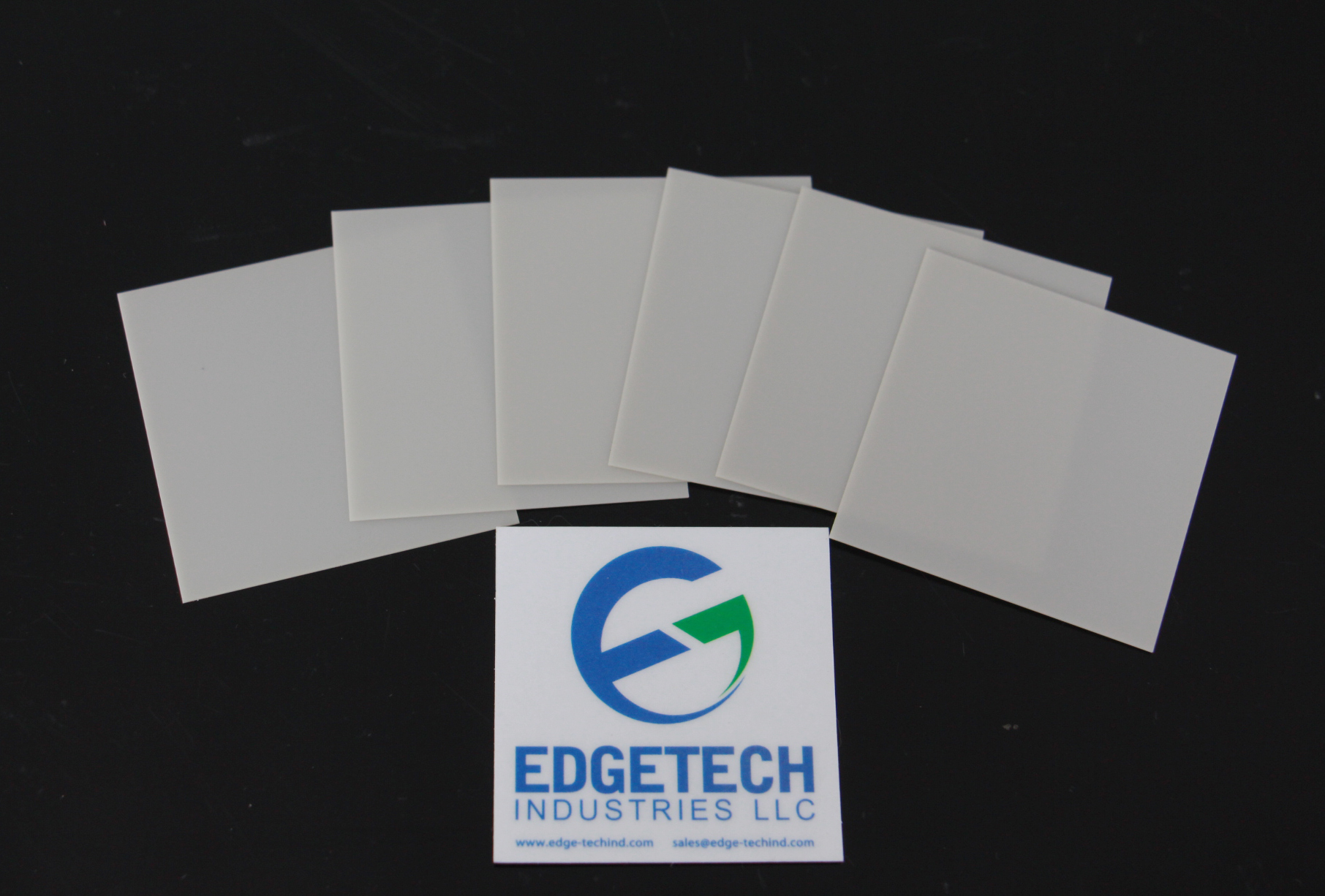

Aluminum Nitride Substrate: The Quiet Enabler Behind Reliable Electronic Packagi
The best electronic packages are often the ones no one notices. They do not overheat, crack, warp, or drift out of tolerance under load. They simply keep working. That level of stability depends heavily on the substrate, which is why Aluminum Nitride Substrate continues to gain attention in advanced packaging and power electronics.
A substrate has to do more than hold a circuit in place. It has to manage heat, support electrical performance, and survive repeated thermal cycling. In systems where temperatures rise quickly and operating conditions vary, the substrate becomes one of the most important reliability layers in the build.
This is where aluminum nitride stands out. It combines strong thermal conductivity with electrical insulation, while also offering a coefficient of thermal expansion that is well matched to silicon. That matters in semiconductor packaging because thermal mismatch can create stress at interfaces, especially during heating and cooling cycles. Edgetech describes its Aluminum Nitride Substrates as suitable for demanding semiconductor and power electronics applications, emphasizing heat dissipation, insulation, low dielectric loss, and silicon-matched CTE. Its listed material data includes 170–230 W/mK thermal conductivity and volume resistivity above 10¹⁴Ω·cm.
For design teams, the result is fewer painful trade-offs. A well-chosen AlN substrate can support high-power density while helping maintain signal integrity and package reliability. That is why these substrates are used in RF applications, optoelectronics, power modules, and next-generation electronic assemblies where traditional substrate materials may start to struggle.
The choice of supplier is just as important as the choice of material. In real manufacturing, consistency matters. Surface finish matters. Dimensional accuracy matters. Application support matters. A substrate is not useful because it looks good on a datasheet. It is useful when it performs predictably in production.
Edgetech offers aluminum nitride substrates within a broader AlN portfolio, which is helpful for buyers developing entire assemblies rather than one-off parts. If a project grows from standard substrates into wafer-level platforms, heaters, or custom-machined components, continuity in material sourcing becomes a real advantage.
For applications that demand more from electronic packaging, Aluminum Nitride Substrate is often the material that makes higher performance feel routine.